Fatty alcohol polyoxyethylene ether (commonly called fatty alcohol ethoxylates or FAEs) is a widely used class of nonionic surfactants with broad industrial and consumer applications.
This article explains their core physicochemical characteristics and then dives into practical, formulation-level uses in industrial detergents and degreasers, textile wetting and scouring, and cosmetic emulsification. Technical details such as degree of ethoxylation, cloud point behavior, HLB selection, and less-obvious performance drivers are included to give procurement managers, formulation chemists, and technical readers the depth expected from a public-company technical brief.
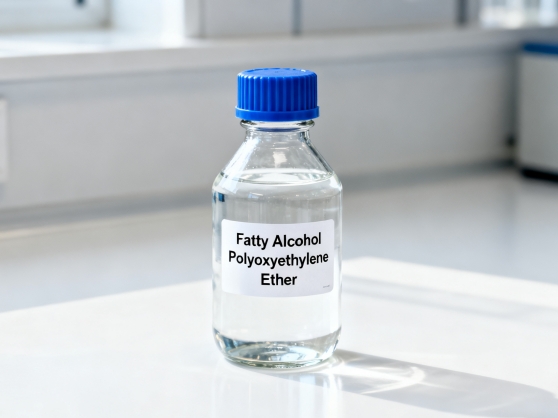
Fatty alcohol polyoxyethylene ethers have the general formula R–O–(CH₂CH₂O)n–H, where R is a fatty alkyl chain (often C10–C18) and n is the average number of ethylene oxide (EO) units.
Two technical knobs control performance:
Alkyl chain length (R): longer chains increase hydrophobicity, strengthen soil solubilization, and lower surface tension at lower concentrations. Typical commercial grades are described as C12–14EO7, C12–15EO9, etc., indicating alkyl range and average EO number.
Degree of ethoxylation (n): more EO units increase water solubility, raise the cloud point, and shift the surfactant toward hydrophilicity (higher HLB). Lower EO numbers favor oil solubilization and lower critical micelle concentration (CMC).
Key physicochemical properties important for formulators:
Hydrophile–Lipophile Balance (HLB): select an HLB appropriate to the intended emulsion type (O/W vs W/O) or wetting task.
Cloud point: nonionic surfactants phase-separate above the cloud point; cloud point is sensitive to EO number, temperature, and electrolyte concentration. Salts and hard water typically lower the cloud point (salting-out), which must be considered in hot-water cleaning or textile processes.
CMC and surface activity: surface tension reduction, wetting, and micelle formation are controlled by R and n. In practice, longer alkyl chains and lower ethoxylation reduce the CMC and increase hydrophobic interactions with oils.
Polydispersity of ethoxylates: narrow vs broad EO distributions affect consistency. Narrow distribution grades give more predictable cloud points and rheology; broad distributions may be cheaper but less predictable.
Less-obvious technical notes:
EO chain distribution and end-groups (e.g., residual free alcohol or unreacted EO) affect mildness, emulsion stability, and regulatory profiles.
Interaction with electrolytes and co-surfactants can create synergistic lowering of surface tension or, conversely, destabilize emulsions via phase inversion.
Manufacturing control: ethoxylation conditions (pressure, catalyst, feed ratios) determine average EO and by-product levels; QC typically monitors active matter, average EO, cloud point, viscosity, and residual alcohol/EO.
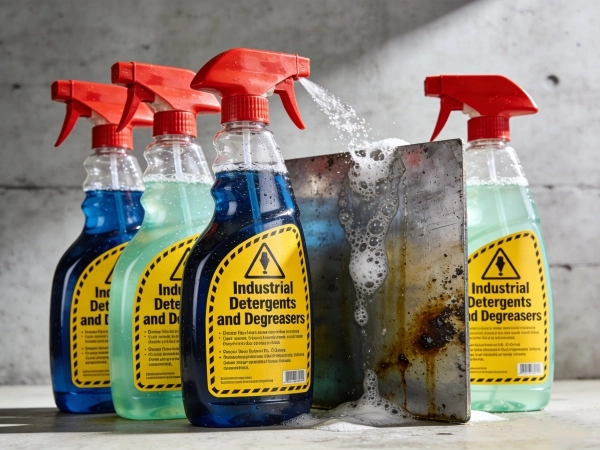
Fatty alcohol ethoxylates are cornerstone ingredients in heavy-duty cleaning because they combine strong wetting, solvency toward hydrophobic soils, and low-to-moderate foaming options.
How they work in degreasers:
Reduce interfacial tension between water and oils, allowing oil droplets to be dispersed as micelles or emulsions that can be rinsed away.
Penetrate porous or hydrophobic surfaces (metal, concrete, textile) by lowering contact angle and improving solvent access to soils.
Synergize with builders and alkalis: chelants and alkalinity boost saponification and soil removal; nonionic FAEs complement builders by solubilizing neutral/insoluble oils that anionic surfactants may struggle with.
Practical formulation points:
Typical concentration ranges in industrial cleaners are highly application-dependent (from trace wetting aids at 0.05% up to 5% or more in concentrated degreasers). Recommend lab screening for soil type and rinse-compatibility.
Low-foam grades are selected for CIP and mechanical cleaning systems; higher EO numbers generally produce more foam and higher cloud points.
Water hardness tolerance: nonionics maintain performance in hard water better than many anionics, but electrolytes can change cloud point behavior—test under actual process water conditions.
Troubleshooting tip: if an otherwise effective degreaser shows phase separation at elevated process temperatures, test cloud point and salt concentration; switching to a slightly higher EO grade or adding a co-surfactant can restore stability.
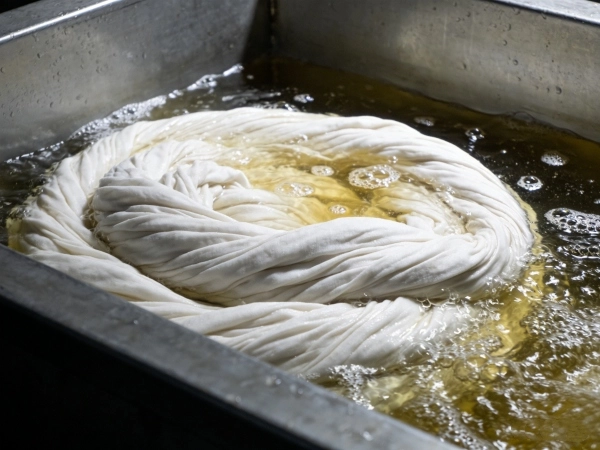
In textile manufacturing and finishing, wetting and scouring are foundational: removing oils, sizing agents, waxes, and spinning finishes so that subsequent dyeing and finishing are uniform.
Why FAEs are used:
Rapid wetting: lowering contact angle enables complete fiber wetting, which is essential for uniform scouring and dye access.
Removal of hydrophobic residues: FAEs solubilize lubricants and natural oils, improving effluent clarity and downstream process control.
Dye leveling and penetration: selected nonionic grades help even dye distribution by improving wetting and reducing localized aggregates.
Technical selection considerations:
Temperature vs cloud point: many textile baths operate at elevated temperatures. Choose FAEs with cloud points safely above process temperature to avoid flocculation or phase split.
Compatibility with alkaline scouring: scouring baths often contain sodium hydroxide and peroxides; some nonionic grades are resistant, but oxidative environments may change odor or color—evaluate stability under process conditions.
Dyeing interactions: nonionics can influence fiber–dye interactions and may impact leveling—pilot dye runs are crucial.
Performance optimization: blending a short-chain (lower EO) FAE to remove heavy oils with a higher-EO grade to stabilize emulsions often gives the best balance of cleaning and process stability.

Fatty alcohol polyoxyethylene ethers are favored in cosmetics for mildness, low ionic sensitivity, and flexible HLB tuning, enabling stable O/W creams, lotions, and cleansing products.
Roles in personal care:
Primary or co-emulsifier: creates stable oil-in-water emulsions when paired with thickeners and co-surfactants.
Solubilization of fragrance and actives: low levels can solubilize small amounts of hydrophobic actives (vitamins, fragrances) without compromising skin feel.
Mildness: appropriate EO levels reduce irritancy relative to many anionics, making FAEs common in baby and sensitive-skin formulations.
Formulation guidance:
Use-levels in leave-on products often range 1–8% depending on desired sensory and emulsifying strength; rinse-off cleansers commonly use lower levels as co-surfactants.
Cloud point considerations for temperature-sensitive creams: high cloud point grades prevent phase separation in hot climates or during storage.
Regulatory and preservative load: nonionics themselves do not preserve formulations—preservative systems must be validated for the final emulsion.
Advanced note: the combination of EO chain length and alkyl chain length can dramatically alter rheology and pumpability of a cream; formulators often screen several C12–C15 EO 7–12 grades to find the desired texture.
From a product-management and procurement perspective, fatty alcohol ethoxylates offer predictable performance across sectors with some practical imperatives:
Procurement tip: request technical data sheets with EO distribution curves and batch-level QC to ensure consistency across lots—this reduces formulation drift and minimizes re-validation timelines.
Fatty alcohol polyoxyethylene ethers are indispensable nonionic surfactants whose utility spans heavy industrial cleaners, textile processing, and sophisticated cosmetic emulsions. The correct selection—guided by alkyl chain length, degree of ethoxylation, cloud point, and compatibility with electrolytes and co-surfactants—translates directly into process efficiency, product stability, and cost-effectiveness. For listed companies and formulators, demanding tight QC (EO distribution, active matter, cloud point) and testing under real-world water and temperature conditions is the difference between a robust product and one that underperforms in the field.